This article was written by a proud Council of School Supervisors and Administrators member, AFSA Local 1 Donna McGuire.
America250 is more than an anniversary — it is a monumental moment for every American. It calls us to reflect on how this country began, the hardships endured by its earliest settlers, and the courage of those who crossed oceans to build a new life. For more than 250 years, people left their native lands with nothing guaranteed except the hope of the American dream. My own family was among them. They came from Ireland with little more than determination, and they found their footing through the strength and solidarity of America’s unions.
The work my parents and extended family found in various trades didn’t just provide jobs — it provided dignity. Their union careers offered fair wages, safe conditions, health benefits, pensions, and the chance to give their families the quality of life they once only imagined. They took risks, made sacrifices, and when they looked back, they all agreed it was worth it. They were grateful then, and we remain grateful now.
America250 marks the anniversary of our independence — the moment our forefathers laid the foundation for a nation built on shared responsibility and collective progress. The infrastructure that rose from their vision — our cities, roads, railways, and waterways — was a remarkable achievement. But it was the immigrant worker, and the generations of laborers who followed, who turned that vision into reality.
Even before July 4, 1776, workers were organizing in small pockets across the colonies. Their strikes were risky and often met with fines, punishment, or unemployment. Many were hurt. Some were prosecuted. But they stood up anyway. They believed that better conditions were worth fighting for, even when the odds were stacked against them.
These early labor leaders are my heroes. Their courage and persistence shaped the AFL-CIO and the labor movement we know today. Terence Powderly led the Knights of Labor in the late 19th century, growing it to nearly a million members at its peak. Samuel Gompers later guided the Federation of Organized Trades and Labor Unions, fighting against child labor and for shorter workdays. And in 1886, Peter McGuire — co-founder of the United Brotherhood of Carpenters and Joiners of America — helped merge these efforts into what became the American Federation of Labor. These pioneers envisioned a national movement strong enough to protect workers for generations.
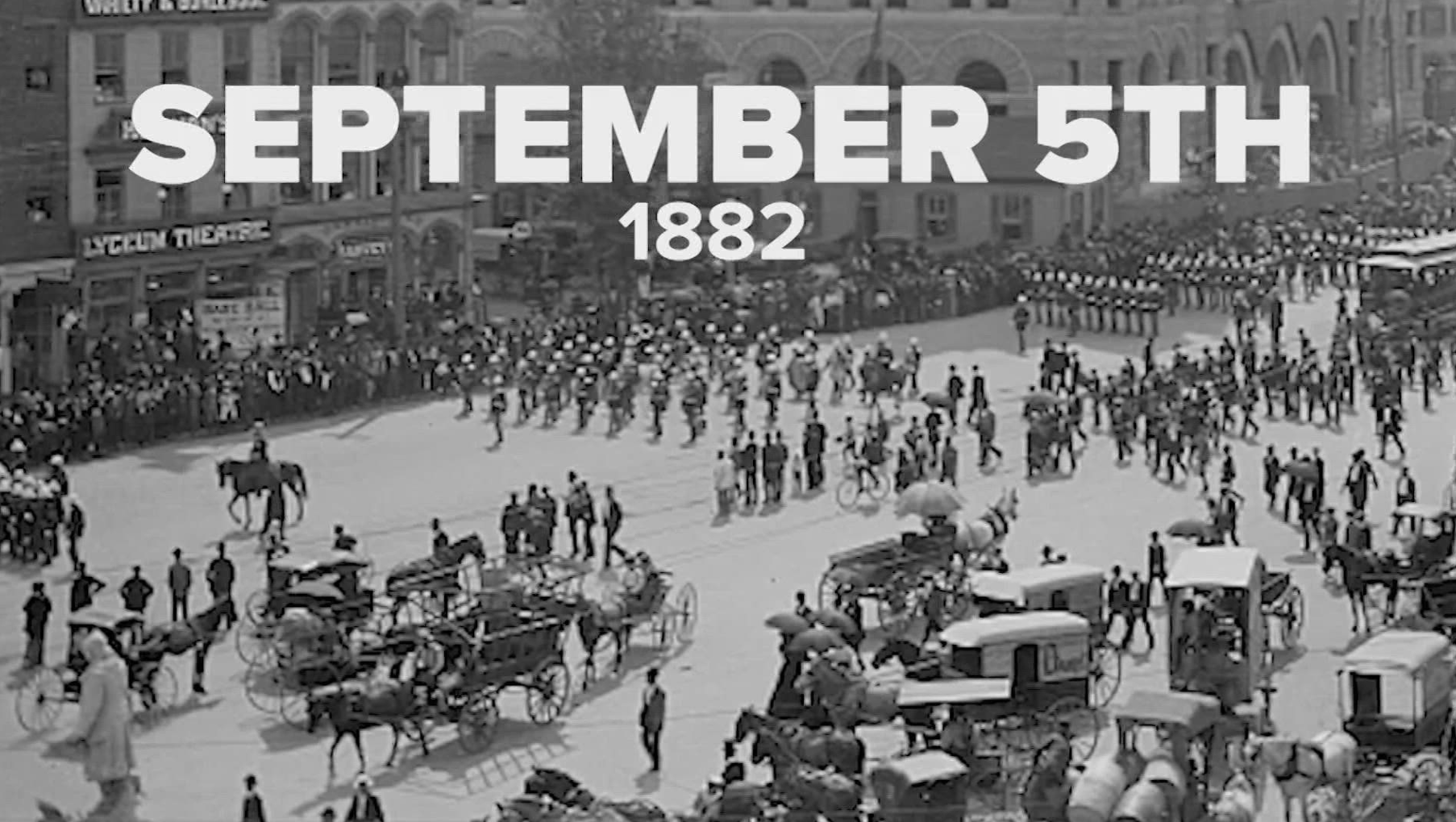
I’m especially proud that Peter J. McGuire first proposed a Labor Day parade in 1882 in New York City — a day meant to honor the American worker between Independence Day and Thanksgiving. The idea spread quickly, celebrated in more than half the states before becoming a national holiday in 1894.
Later, John L. Lewis propelled the Committee of Industrial Organizations during the industrial revolution, helping bring women and minorities into unions and the workforce. The eventual merger of the AFL and CIO in the 1950s created a unified force that shaped modern American labor.
Let’s fast-forward to the late 1970s. This is when unionism began to decline. Less people started to take an active stance in unions or took non-union employment. The graph from the Economic Policy Institute depicts a decline in income in the decades that followed.
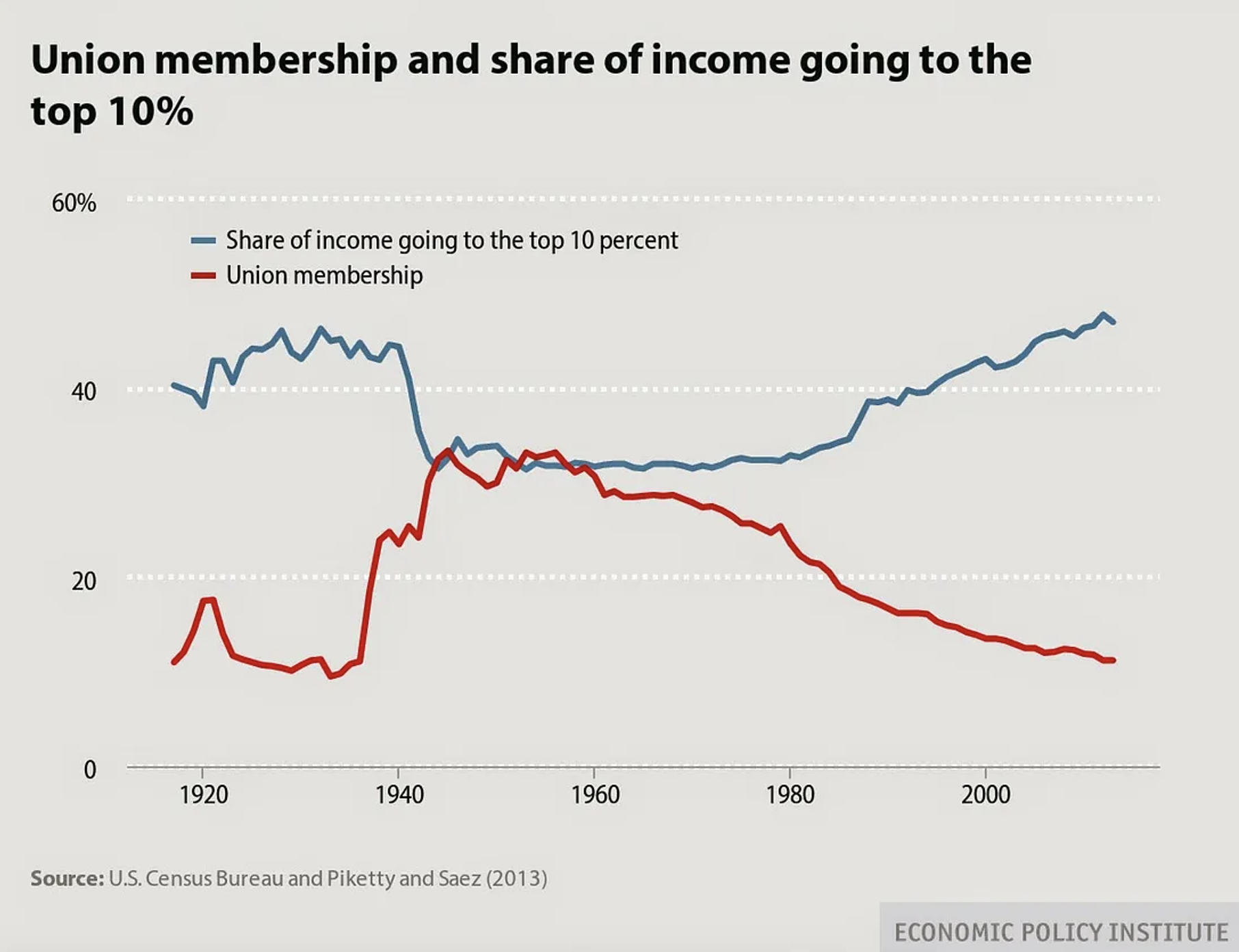
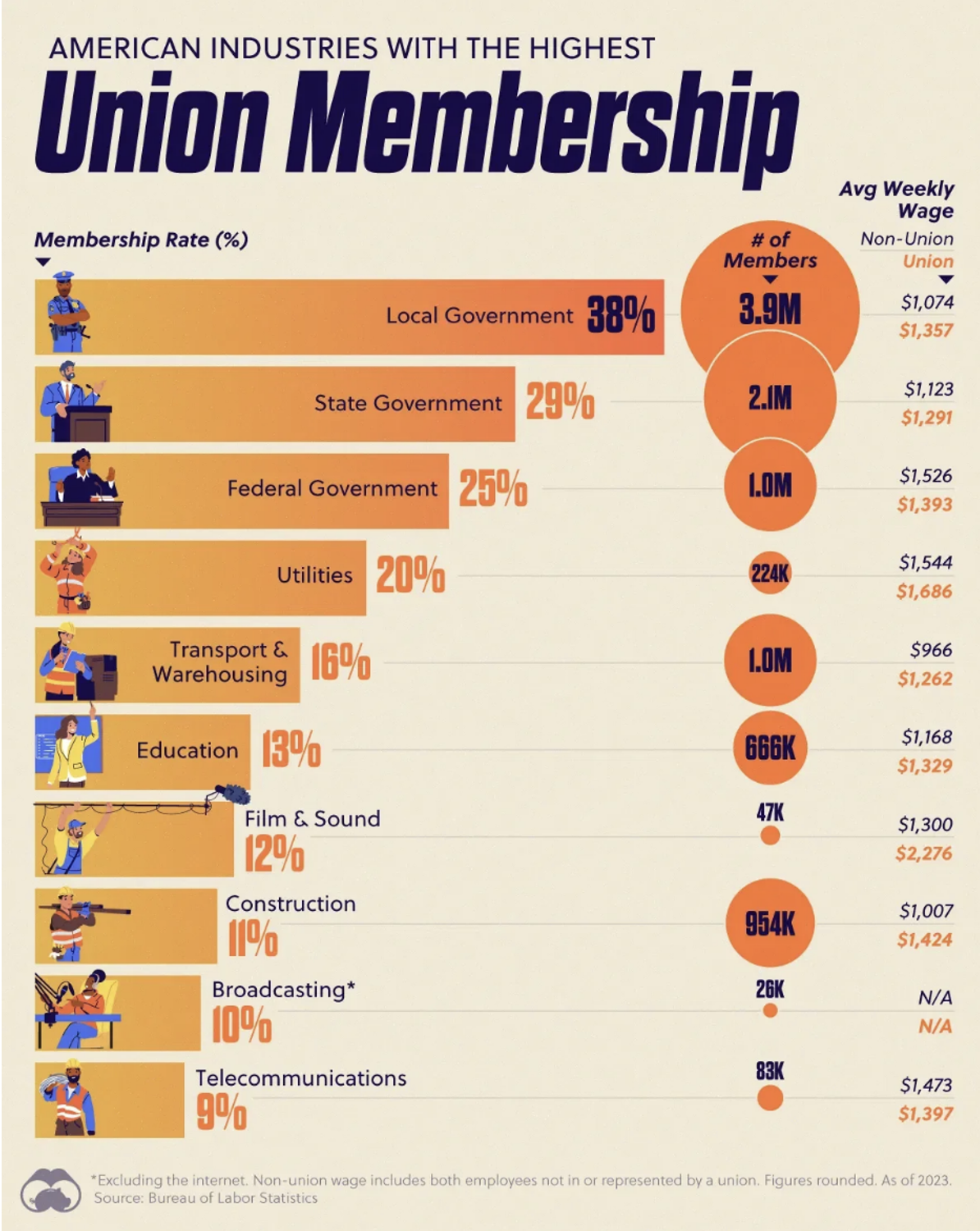
Right now, during this monumental time in history of America250, our country is experiencing an expanding population, new immigrants, the housing and cost-of-living, all continue to rise. It can be difficult to find work and sometimes people resort to positions that are not affiliated with a union. It can be enticing, may be seem like a short-term solution that may develop into a long-range position. However, positions that counter or compete with union-based work, may not always provide the expensive health care benefits, overtime, just to name a few. Over time, the decrease in union membership have created more of a divide in overall pay and work conditions. The union model that has kept our country strong is being challenged and we need to support the unions that have supported us for generations. It is also imperative to protect them so that the next generation can continue to enjoy the same quality of life that we experienced from being in a union household.
Our workforce — and the unions that support it — are the backbone of this nation’s success. I am proud of the forefathers and foremothers of the AFL-CIO. Their courage, sacrifice, and vision are deeply woven into the meaning of America250. Their legacy is alive in every bridge, every school, every factory, every home — in the very fabric of American life.
They are the heroes behind the American dream. This Labor Day, as you celebrate, please take a moment to reflect on groundwork our forefathers and mothers created, to bring us to our dream and then continue to salute America250.
Thank you, and God bless America.