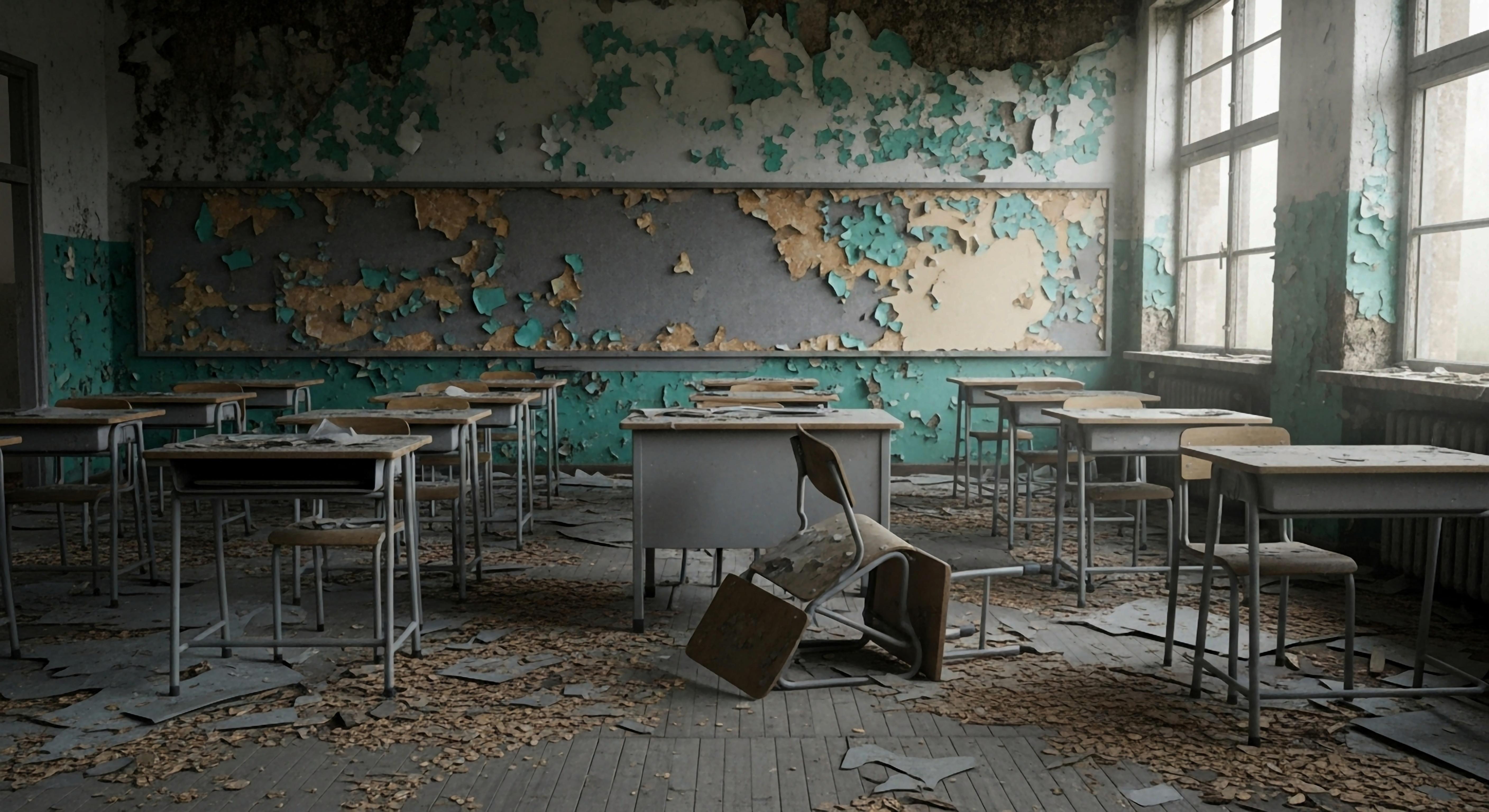
For millions of students and educators across the United States, the greatest challenge inside a school building should be learning and teaching, not wondering whether the heat will work, whether the air is safe to breathe, or whether another maintenance failure will interrupt the school day. Yet in public schools across the country, that has become an increasingly common reality.
A recent investigation by the Houston Chronicle highlighted the growing strain facing school districts as aging campuses require increasingly expensive repairs and modernization efforts. In Houston ISD alone, officials have identified more than 100 campuses that may ultimately require replacement based on the condition of their facilities. District spending tied to repairs and upkeep has also surged in recent years, driven by aging HVAC systems, roof failures, and deteriorating facilities. Houston’s experience offers a stark example of what can happen when decades of deferred maintenance collide with aging school buildings and rising construction costs.
Across the country, aging school buildings are struggling under decades of deferred maintenance and chronic underinvestment. Outdated heating and cooling systems fail during extreme weather. Leaks, mold, asbestos, deteriorating plumbing, and inadequate ventilation systems create health and safety concerns that no child or educator should ever have to face.
The U.S. Government Accountability Office’s national study of public school facilities found that 54 percent of public school districts needed to update or replace multiple building systems or features in at least half of their schools. GAO also estimated that 41 percent of school districts needed to update or replace HVAC systems in at least half of their schools.
The U.S. Environmental Protection Agency has repeatedly warned that poor indoor air quality in schools can contribute to health problems and interfere with learning. The EPA identifies respiratory problems, asthma episodes, headaches and allergic reactions among potential health effects and notes that indoor environmental conditions can affect student performance and attendance. The agency’s research on indoor air quality and academic performance also points to research connecting classroom ventilation and other environmental conditions with student performance.
According to the latest State of Our Schools report, the annual gap between what the nation needs to spend on public school facilities and what is actually being spent is approximately $85.5 billion. The 2025 State of Our Schools report found that the country continues to face a massive facilities investment shortfall despite the temporary infusion of federal pandemic relief funds.
That is not simply an infrastructure problem. It is an equity problem.
The burden falls hardest on high-poverty communities and school districts with limited local tax capacity. Because school construction and maintenance funding relies heavily on local and state resources, wealthier districts can have greater capacity to finance major capital projects. The GAO has documented the importance of local funding to school facilities, while research on school finance has repeatedly identified disparities associated with local property wealth. In too many cases, a student’s access to a safe and modern learning environment still depends heavily on their ZIP code.
The reporting out of Houston underscores how quickly deferred maintenance can evolve into a far larger financial challenge. District leaders there have warned that postponing repairs can leave schools confronting increasingly expensive renovation and replacement decisions.
That growing concern has renewed attention on federal efforts aimed at addressing school infrastructure inequities, including legislation in Congress.
The Rehabilitation of Historic Schools Act of 2026, H.R. 8501, was introduced by Rep. Dwight Evans (D-Pa.) on April 27, 2026, and referred to the House Committee on Ways and Means. The bill would amend the Internal Revenue Code to allow certain rehabilitation expenditures for public school buildings to qualify for the federal historic rehabilitation tax credit.
The legislation is narrowly targeted. It would not create a new federal school-construction grant program or provide direct appropriations for school repairs. Instead, it would change the tax treatment of qualifying rehabilitation projects. Under the bill, a building generally would have to have been used as a qualified public educational facility during the five years before rehabilitation and be returned to that use afterward. The bill also calls for the Treasury Secretary to report to Congress within five years on the number of facilities rehabilitated, students served, expenditures and activity in low-income communities.
For school leaders, the proposal addresses one of the most overlooked barriers to student success: the condition of the learning environment itself.
AFSA President Mark Cannizzaro said safe and modern facilities are essential for educational success.
“Creating a positive learning environment starts with school infrastructure that is safe, welcoming, and designed to support student success,” Cannizzaro said. “Too many of our nation’s schools are in dire need of repair, and when buildings are neglected, learning is impacted directly. Students and educators deserve facilities that inspire achievement, not environments that create obstacles to teaching and learning.”
His comments reflect concerns increasingly echoed by district leaders nationwide as infrastructure failures become more common and repair backlogs continue to grow.
School buildings are not just structures. They shape attendance, morale, concentration, educator retention, and student outcomes. Research supports a connection between school facility conditions and educational outcomes, although building conditions are only one of many factors affecting student achievement. The EPA’s research summary cites evidence linking indoor environmental conditions with student health and academic performance.
GAO likewise found that facility problems can interfere with school operations, including HVAC problems that contribute to indoor-air-quality concerns, mold and temporary changes to school schedules.
The urgency surrounding the issue has intensified as school districts confront the expiration of pandemic-era federal relief funds while inflation and rising construction costs continue pushing major repair projects further out of reach.
The Chronicle’s reporting illustrates how many districts are now facing mounting pressure as aging systems fail faster than schools can afford to replace them. In many communities, officials warn that years of deferred maintenance have compounded into far more expensive long-term reconstruction needs.
The American Society of Civil Engineers has similarly warned that decades of underinvestment continue to leave public infrastructure systems vulnerable nationwide despite recent federal spending increases.
In its 2025 Report Card for America’s Infrastructure, the American Society of Civil Engineers gave the nation’s K–12 school facilities a D+ grade. The organization has argued that school infrastructure requires sustained investment and better long-term planning.
Supporters of the Rehabilitation of Historic Schools Act argue that Congress now has an opportunity to recognize public school infrastructure as national infrastructure.
But the legislation faces a significant political obstacle: its prospects for enactment currently appear limited. The bill remains at the introduced stage after being referred to the House Ways and Means Committee. Legislative tracking site GovTrack currently gives H.R. 8501 a 0% estimated probability of enactment. That is a forecast, not a congressional determination, but it underscores how unlikely the bill is to become law without substantial additional movement or support.
The bill’s limited legislative progress is also notable because Evans has pursued versions of the same idea in previous Congresses. The Rehabilitation of Historic Schools Act was introduced in 2017, 2021 and 2023, but those earlier versions did not become law.
That history suggests the current proposal should be viewed less as an imminent solution to the school-infrastructure crisis and more as an effort to put a new financing mechanism on the federal policy agenda.
The legislation could nevertheless have value if Congress ultimately embraces the concept. By making public school rehabilitation eligible for the federal historic tax credit, the proposal could potentially help attract private capital to qualifying projects — particularly older schools that are historically significant and otherwise difficult to finance. Evans has argued that the measure could help leverage private funding for public-school infrastructure.
America cannot claim to invest in educational excellence while allowing the buildings where learning takes place to deteriorate.
Rep. Evans’ proposal may not solve the nation’s school infrastructure crisis on its own. And given its current legislative status and poor enactment prognosis, it would be premature to portray H.R. 8501 as a solution that is likely to arrive soon. But advocates say it represents a practical and innovative step toward narrowing the investment gap and helping ensure that every child — regardless of geography or income level — has access to a safe, modern, and functional school building.
The larger question is whether Congress will treat school facilities as an essential component of the nation’s education infrastructure — and whether it will develop financing mechanisms capable of addressing a problem measured not in millions, but in tens of billions of dollars each year.
Safe, modern schools are not a luxury. They are the foundation for learning itself.